Introduction
Post-operative rehabilitation is often a balancing act between protecting healing tissue and stimulating recovery. Clinicians must manage pain, restore mobility, and reintroduce muscle control — all while preventing setbacks.
Winback TECAR Therapy offers a structured, frequency-based approach that supports each phase of recovery with precision.
Using the example of knee surgery rehabilitation, we’ll explore how Winback TECAR can help clinicians accelerate recovery, improve comfort, and restore functional outcomes step by step.
Why TECAR Therapy Makes a Difference
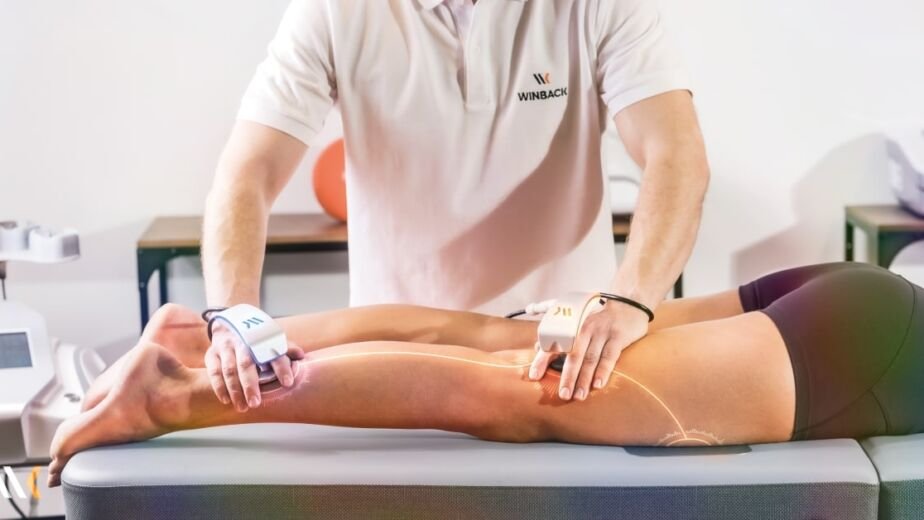
TECAR Therapy (Transfer of Energy Capacitive and Resistive) uses high-frequency radio waves to stimulate natural biological repair. By adjusting the mode and depth of energy transfer — CET, RET, Hi-TENS, and Hi-EMS — clinicians can address pain, stiffness, neuromuscular inhibition, and tissue reactivation throughout the post-operative timeline.
This ability to modulate energy based on tissue depth and clinical goal makes Winback TECAR uniquely suited to post-op care — from early protection to return-to-performance phases.
Step 1: Manage Pain & Swelling
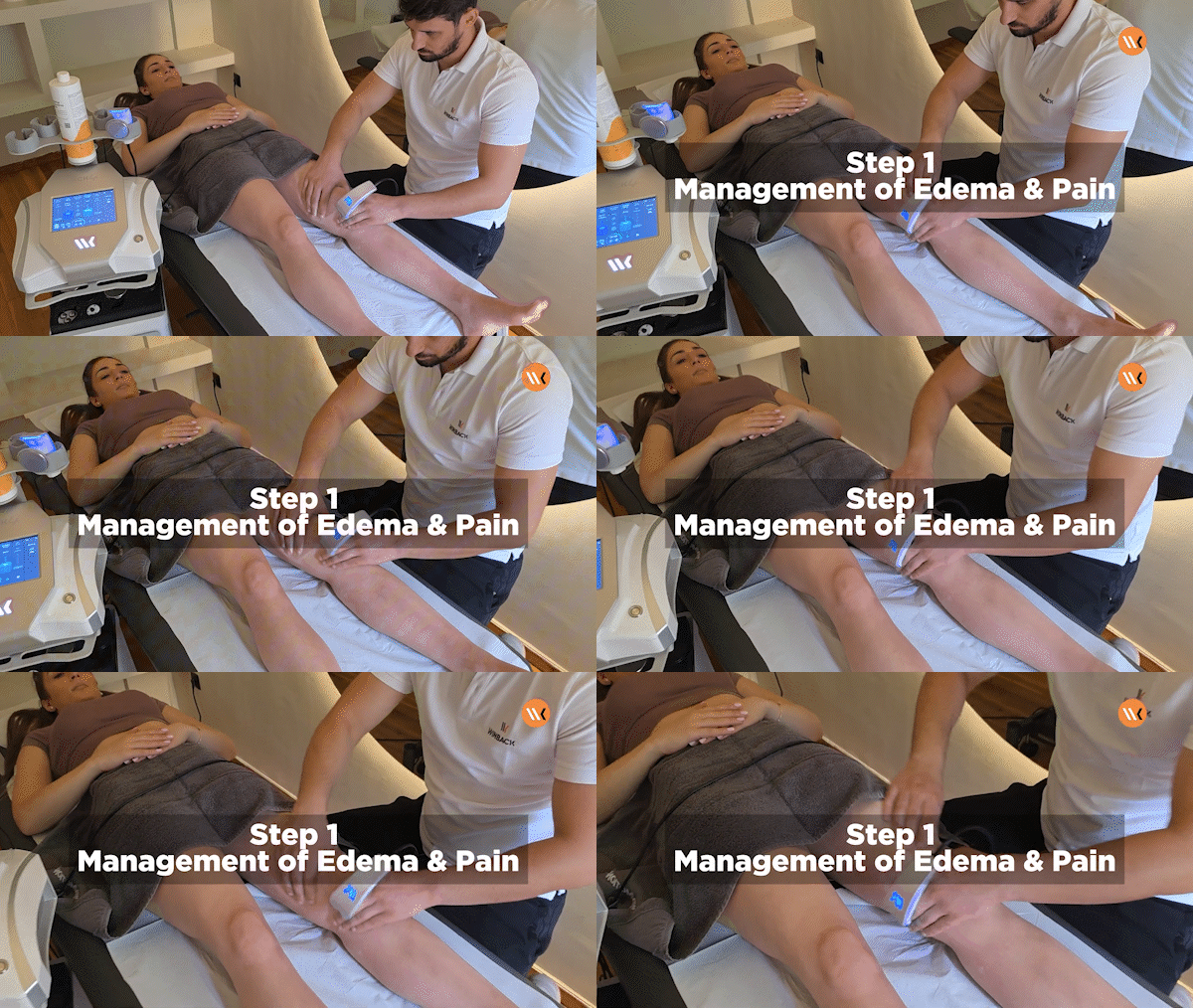
Frequencies: CET + Hi-TENS
Care+ Program: PushBack+
In the first few days following surgery, the focus is on patient comfort and inflammation control.
- CET (Capacitive Energy Transfer) acts on superficial tissues to enhance microcirculation and drainage of interstitial fluid.
- Hi-TENS provides mild, non-invasive pain modulation through surface stimulation.
This combination helps decrease post-surgical discomfort, making the joint feel lighter and less restricted. Early pain relief encourages patient confidence and sets the stage for mobility work.
Clinical Focus: Support comfort, reduce pain, and promote early tolerance for gentle movement.
Step 2: Restore Motion
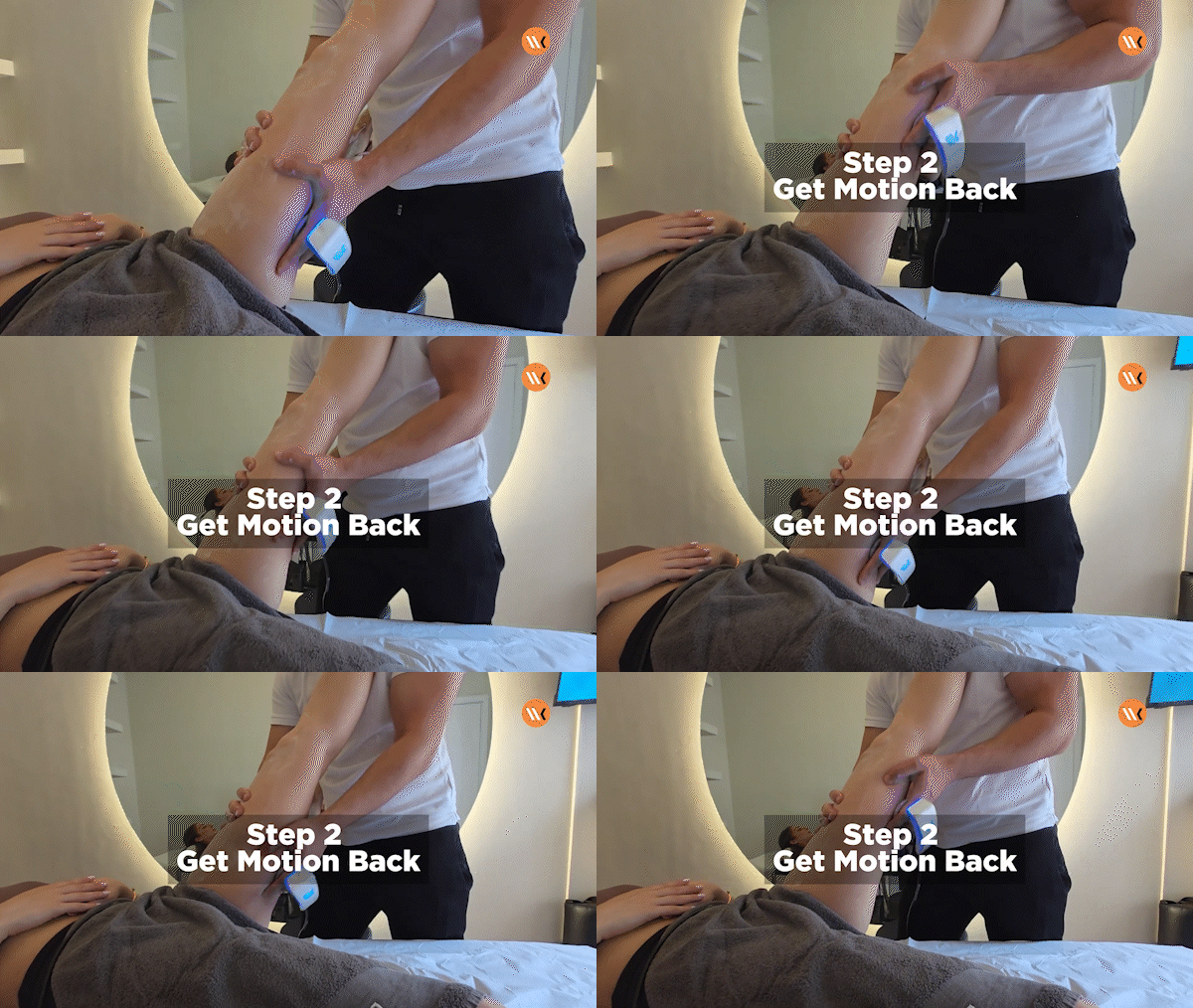
Frequency: RET (Resistive Energy Transfer)
Once swelling is controlled, the next challenge is joint stiffness.
RET energy targets deeper periarticular structures — such as tendons, joint capsules, and fascia — to improve tissue extensibility.
During post-op knee rehab, clinicians often use RET while guiding controlled passive or active-assisted motion, helping patients regain full extension and prevent fibrosis.
Clinical Focus: Restore range of motion safely and progressively, avoiding compensations or tissue strain.
Step 3: Reactivate Muscles
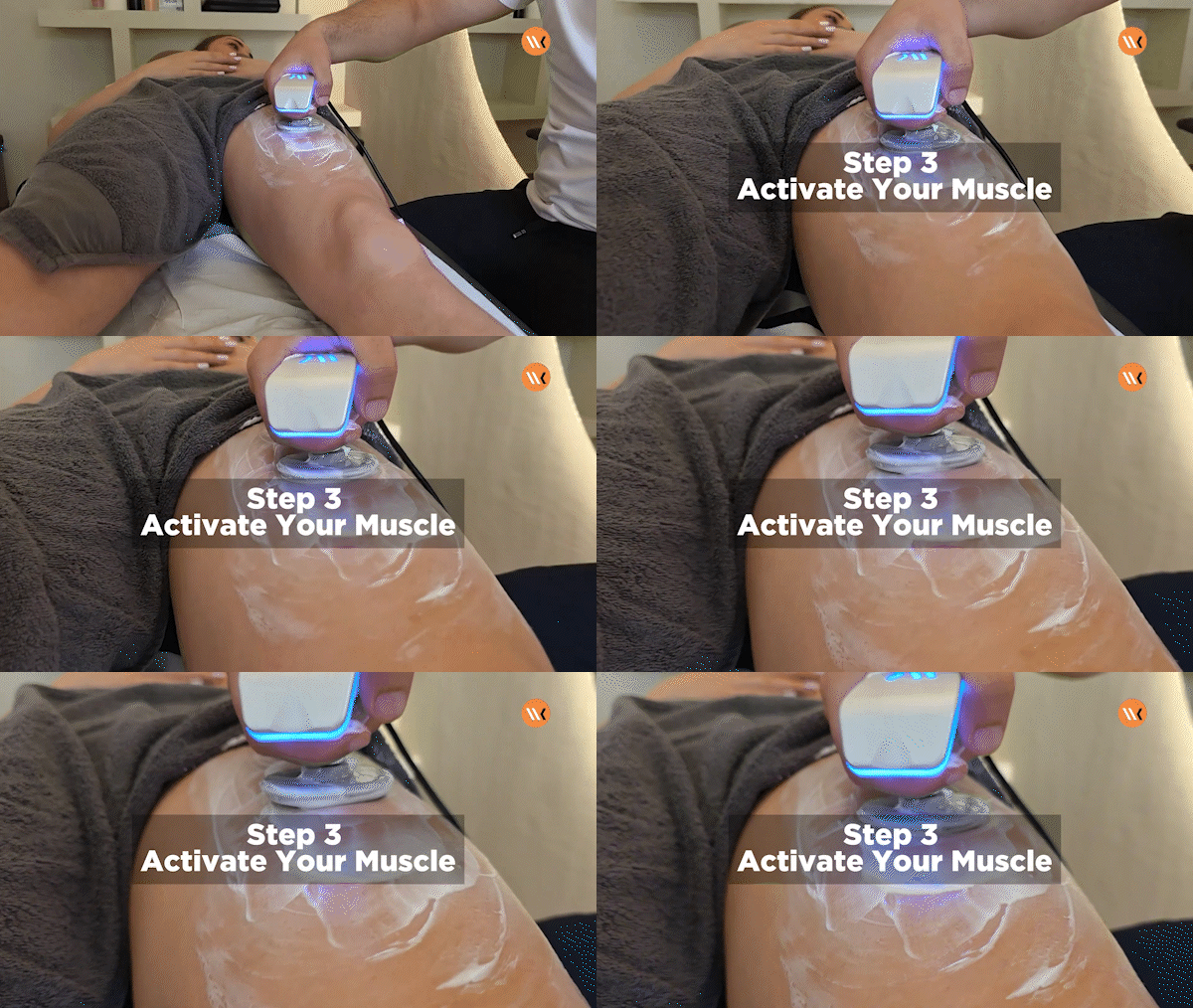
Frequencies: RET + Hi-EMS
Care+ Program: Rehab+
Muscle inhibition is one of the most common barriers after knee surgery, particularly affecting the quadriceps.
By pairing RET with Hi-EMS, clinicians can stimulate deeper tissue perfusion while reestablishing motor activation.
This dual-action approach promotes early muscle contraction and neural reconnection — critical for stability and gait retraining.
Clinical Focus: Rebuild quadriceps recruitment and enhance control during early load-bearing.
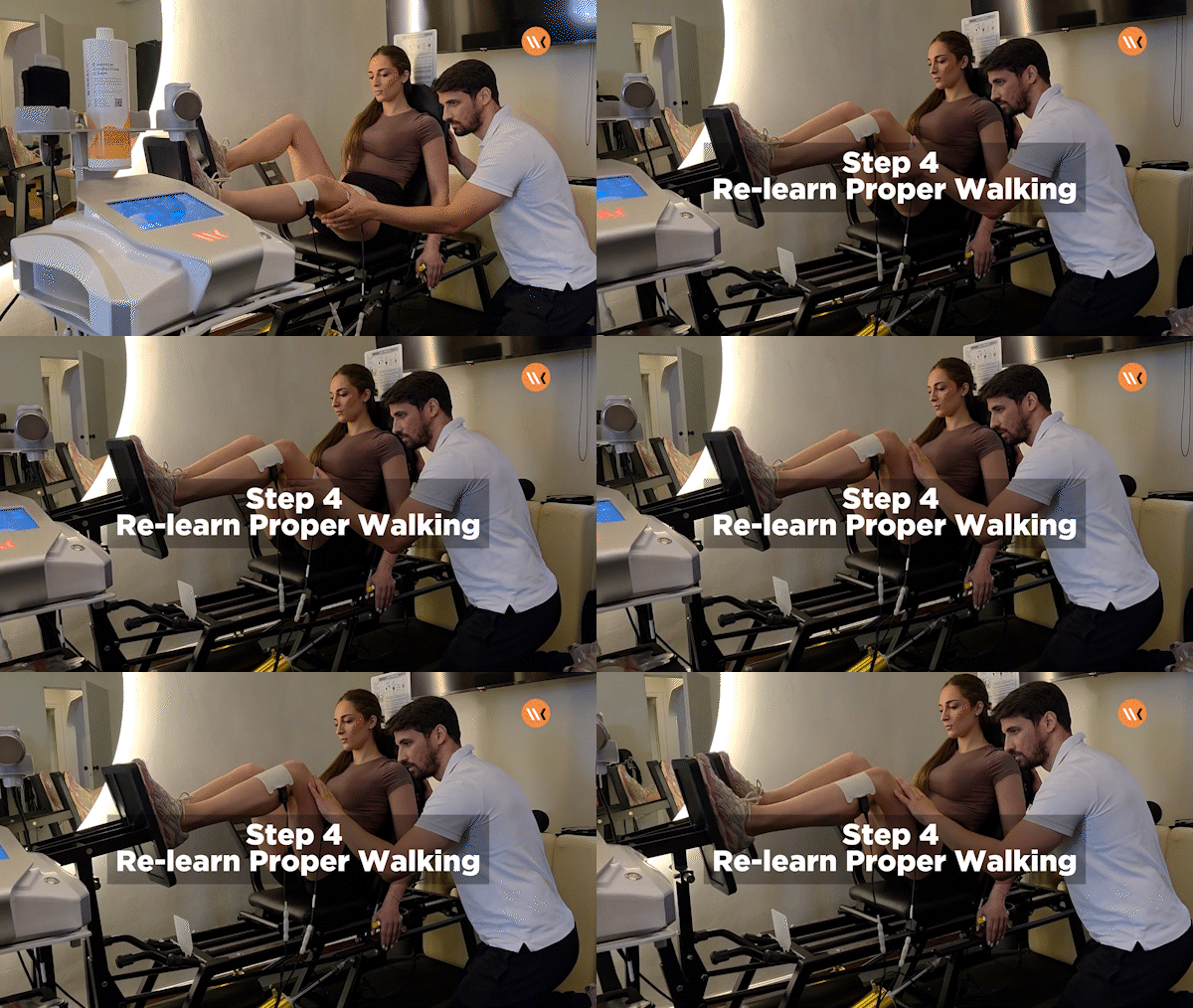
Step 4: Relearn Proper Movement Patterns
Frequencies: Sub-thermic RET + Hi-EMS
Care+ Program: Rehab+
When patients begin standing and walking, motor coordination becomes a priority.
Using sub-thermic RET during dynamic sessions helps activate deeper neuromuscular pathways without creating heat, while Hi-EMS reinforces proper activation timing.
The result is smoother, more symmetrical movement during walking, stepping, or light functional tasks.
Clinical Focus: Reintegrate neuromuscular control and retrain efficient, balanced movement.
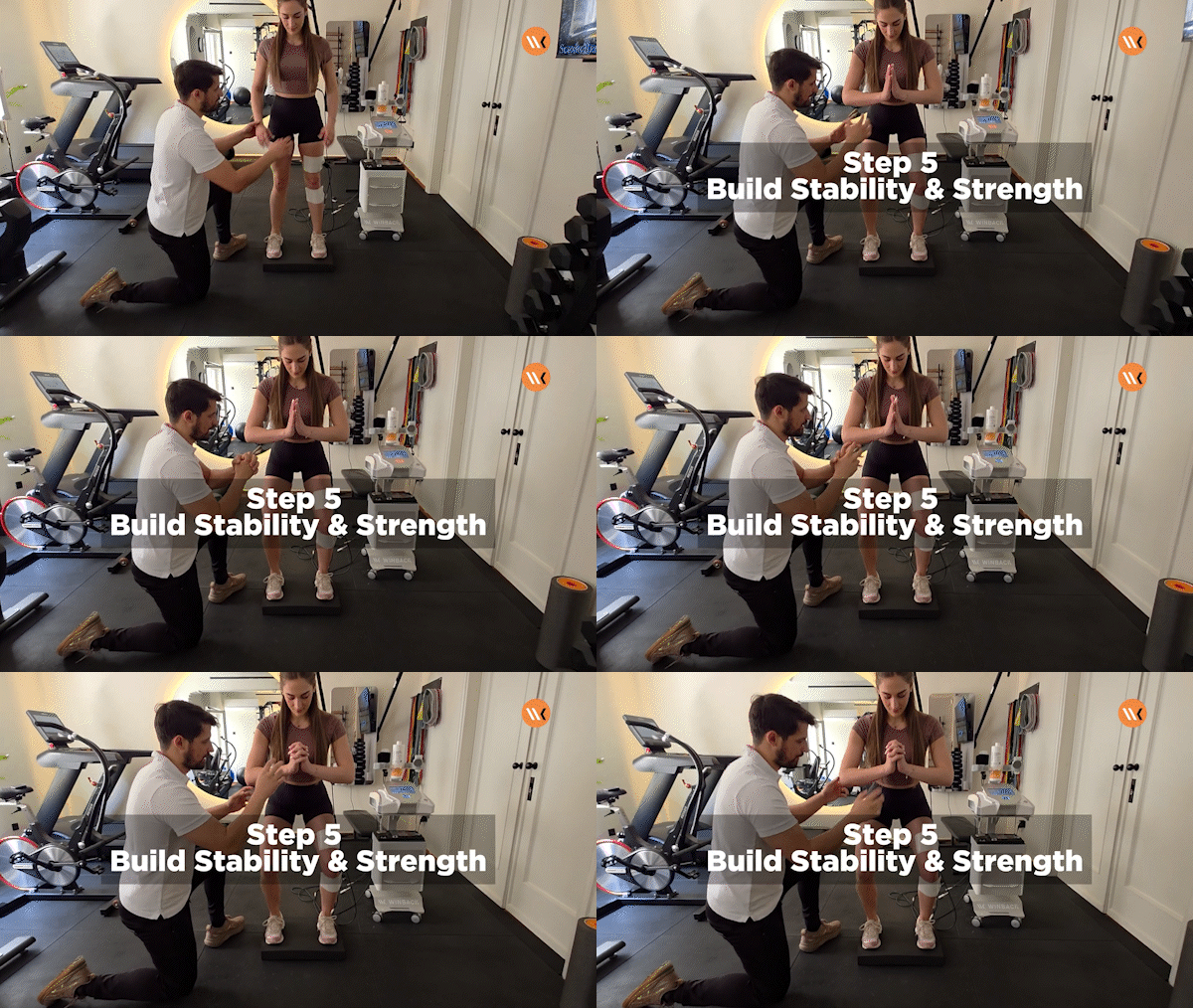
Step 5: Build Strength & Stability
Frequencies: CET + RET + Hi-EMS + Hi-TENS
Care+ Program: Tabata+
As the patient enters the advanced rehabilitation phase, the focus shifts to strength and dynamic stability.
All TECAR modes are combined for complete synergy:
- CET supports surface comfort and elasticity.
- RET energizes deep tissue layers for endurance.
- Hi-EMS promotes active muscle contraction and strength building.
- Hi-TENS maintains comfort and reduces post-exercise sensitivity.
This phase bridges clinical recovery with functional independence — preparing the patient for return to sport, work, or daily activity.
Clinical Focus: Build lasting stability and restore full confidence in movement.
Beyond the Knee: A Versatile Framework
While this protocol highlights post-operative knee rehabilitation, the same Winback TECAR principles apply to other surgeries — including shoulder, hip, or spinal recovery.
By adjusting the energy mode and therapeutic pairing, clinicians can personalize treatment intensity, tissue depth, and session goals for each case.
Key Benefits Across All Post-Op Care:
- Faster return to movement
- Reduced pain and swelling
- Enhanced muscle activation and coordination
- Improved patient comfort and compliance
- Seamless integration with manual and exercise therapy
Watch the Full Demonstration
🎥 Watch the full video to see how Winback TECAR Therapy is used in every stage of post-operative recovery — from early pain management to advanced stability training.
👉 Watch Now
Learn More with Winback Academy
Continue your clinical training with Winback Academy — the global education hub for TECAR Therapy.
Access:
- E-learning modules for every experience level
- Clinical protocol libraries and webinars
- Case studies and research resources
- A global network of expert TECAR users
Ready to See Winback TECAR in Action?
Experience how frequency precision can redefine your rehabilitation approach.
👉 Book a Demo with Winback to learn how TECAR Therapy can support your post-operative patients.