
Healing is not a passive event. It is an active biological process that depends on the environment surrounding the tissue and the cells responsible for repair. After injury, surgery, or prolonged overload, the body’s ability to self-repair is often limited—not because healing stops, but because the conditions for it are no longer optimal.
Radiofrequency used in TECAR Therapy is designed to support this process by helping restore the internal environment that allows tissue to respond, adapt, and progress through rehabilitation more effectively.
Healing Begins at the Cellular Level
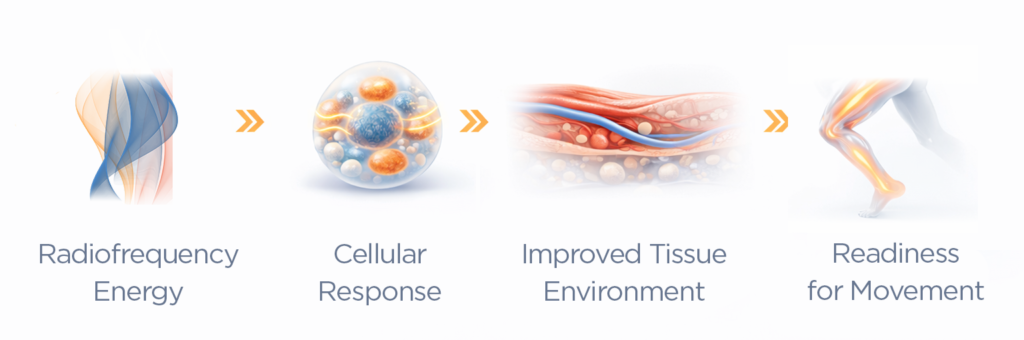
Every phase of tissue repair starts inside the cell. Cellular membranes regulate metabolic exchange, oxygen availability, and energy production. When tissue is stressed, these processes slow, circulation becomes less efficient, and movement often feels guarded.
Radiofrequency supports healing by improving the conditions in which cells operate. Rather than forcing mechanical change, it encourages an endogenous response—allowing tissue to actively participate in recovery.
For a deeper look at the physiological response that occurs during treatment, clinicians can explore Inside the Science: What Happens During TECAR Therapy.
What’s Happening Beneath the Surface
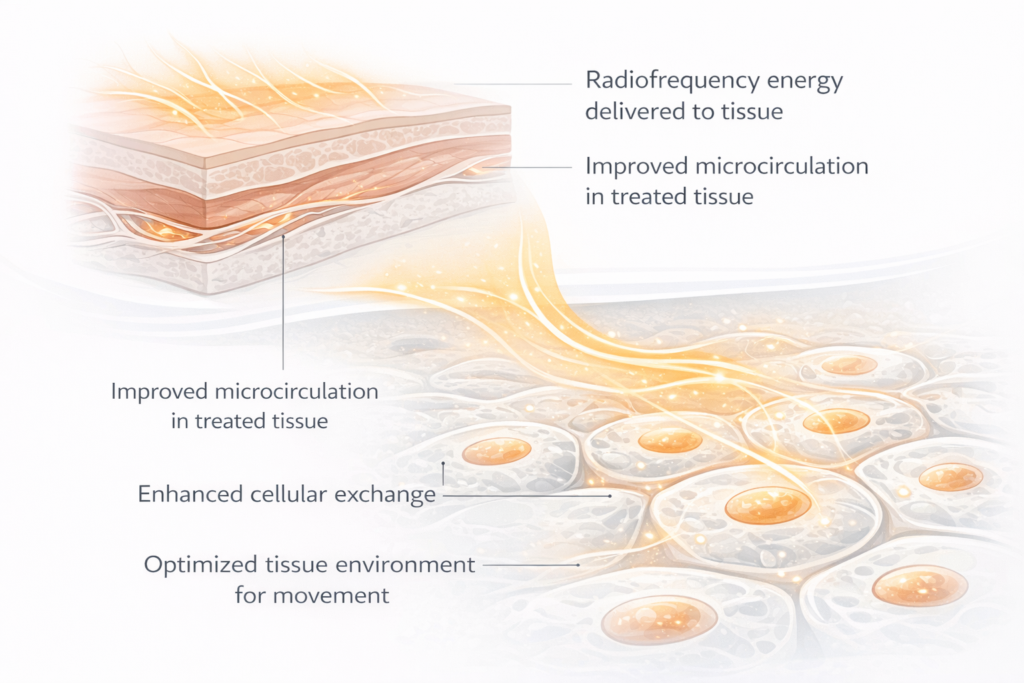
When radiofrequency energy is delivered to tissue, the effects extend beyond surface warmth. The interaction occurs within the tissue itself, supporting:
- Improved microcirculation
- More efficient cellular exchange
- Enhanced tissue elasticity and responsiveness
These changes help reduce protective neuromuscular tension and improve the tissue’s capacity to accept manual therapy and movement.
This concept—creating the right internal conditions rather than forcing progress—is central to how TECAR Therapy is applied clinically. It is also why the technology is used across a wide range of applications, from post-operative care to bone and connective tissue rehabilitation.
A related example of this principle can be found in How TECAR Helps Create the Right Environment for Bone Healing.
While focused on bone, the article illustrates a broader idea that applies to all tissues: healing improves when the biological environment is optimized.
From Cellular Readiness to Functional Progress
As cellular efficiency improves, the effects compound across systems. Tissue becomes more extensible, guarding softens, and movement begins to feel safer and more controlled.
Clinicians often notice that:
- Manual techniques feel more effective
- Patients tolerate exercise earlier
- Transitions from symptom modulation to active care are smoother
Progress is not rushed—it becomes possible sooner, with less resistance.
Why This Matters in Practice
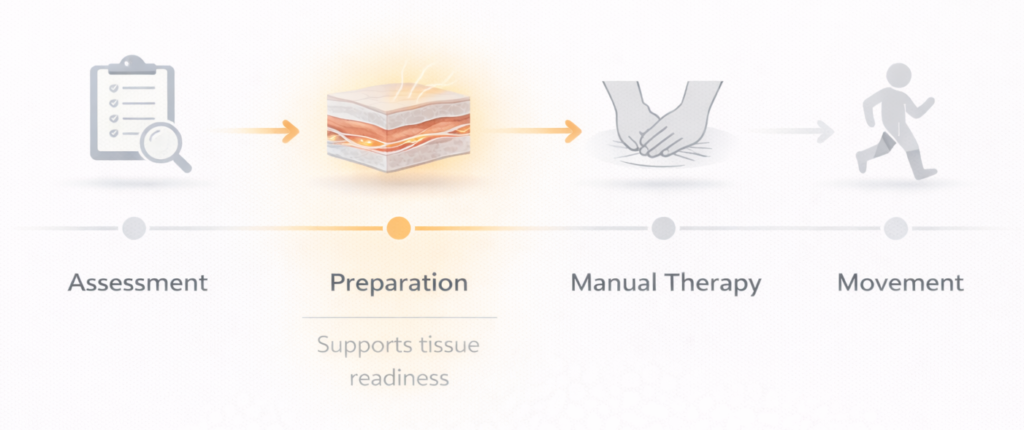
TECAR Therapy supports rehabilitation by preparing tissue to respond more effectively to care.
Rather than replacing hands-on techniques or movement-based rehabilitation, radiofrequency fits within the treatment session as a preparatory tool—helping reduce friction between phases of care. When tissue is more responsive, clinicians can progress confidently without pushing beyond tolerance.
Over time, this approach supports not just short-term symptom relief, but more sustainable outcomes. This philosophy is explored further in TECAR Therapy and Long-Term Recovery.
Supporting Modern Rehabilitation
In modern rehabilitation, success often depends on timing—introducing the right intervention when the tissue is ready to respond. By supporting cellular activity and tissue responsiveness, radiofrequency helps clinicians work with the body’s natural processes rather than against them.
For clinicians seeking a foundational overview of how TECAR Therapy integrates into rehabilitation practice, What Is TECAR Therapy? A Clinician’s Guide provides additional context.
Conclusion
The body already knows how to heal. Radiofrequency therapy helps by restoring the conditions that allow that healing to occur more efficiently—at the cellular level, within the tissue, and throughout the rehabilitation process.
When the environment is right, progress follows naturally.

