TECAR therapy can sound complicated fast.
You hear words like radiofrequency, diathermy, capacitive, resistive, and cellular activity. For many patients, that is where the explanation stops feeling useful.
A better way to explain TECAR is to focus on what clinicians are actually trying to do with it.
In plain English, TECAR is a radiofrequency-based treatment used to create effects inside the treated area, not just at the surface. That matters because the goal is usually bigger than making skin feel warm. Clinicians may use TECAR to help prepare tissue, improve comfort, support local circulation, and make movement or hands-on treatment easier.
That is why the mechanics matter. They help explain why one patient notices warmth, another notices easier movement, and the clinician is thinking about tissue feel, guarding, and treatment readiness.
The 5 mechanics at a glance
A simple way to understand TECAR therapy is to look at it across five overlapping levels:
- Tissue level: where and how heat is being generated
- Biomechanical level: how tissue feels and moves
- Neural level: how the area feels in terms of sensitivity and guarding
- Systemic level: how local circulation and oxygen delivery may change
- Micro level: the smallest, most technical discussion around cellular activity
These are not five separate events. A clinician is often thinking about several of them at once during the same session.
Tissue level: heat generated inside tissue, not just placed on top
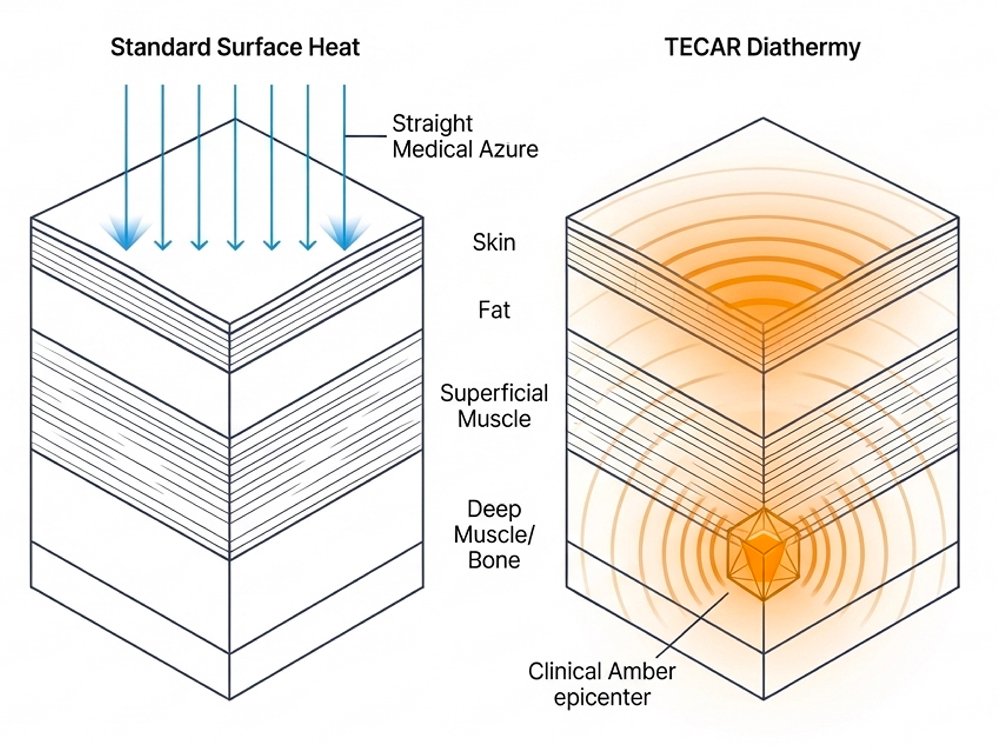
The tissue level helps answer one of the biggest points of confusion: surface warmth is not the same thing as heat generated deeper in tissue.
A hot pack mostly warms from the outside in. TECAR is usually described differently. Clinicians use it with the goal of creating deep internal diathermy, meaning heat generated within the treated tissue rather than only sitting at the surface.
That does not mean the patient feels deep hidden heat while the skin stays cool. Most patients still notice warmth at the surface. The difference is where the main treatment effect is happening.
The important distinction here is that TECAR is not being used like a simple hot pack. Patients may still feel warmth at the surface, but the treatment is meant to create an effect within the treated tissue, not just on top of it. That deeper thermal effect is part of why the area may start to feel more workable during care.
This matters because deeper heat can change how the area feels during care. Tissue may feel more workable. Movement may come easier. Manual treatment may feel smoother.
In simple terms: TECAR is not just about warming the skin. The idea is to influence the treated area more deeply so it feels more ready to move and work.
Biomechanical level: how the tissue feels and moves
The biomechanical level is about tissue behavior.
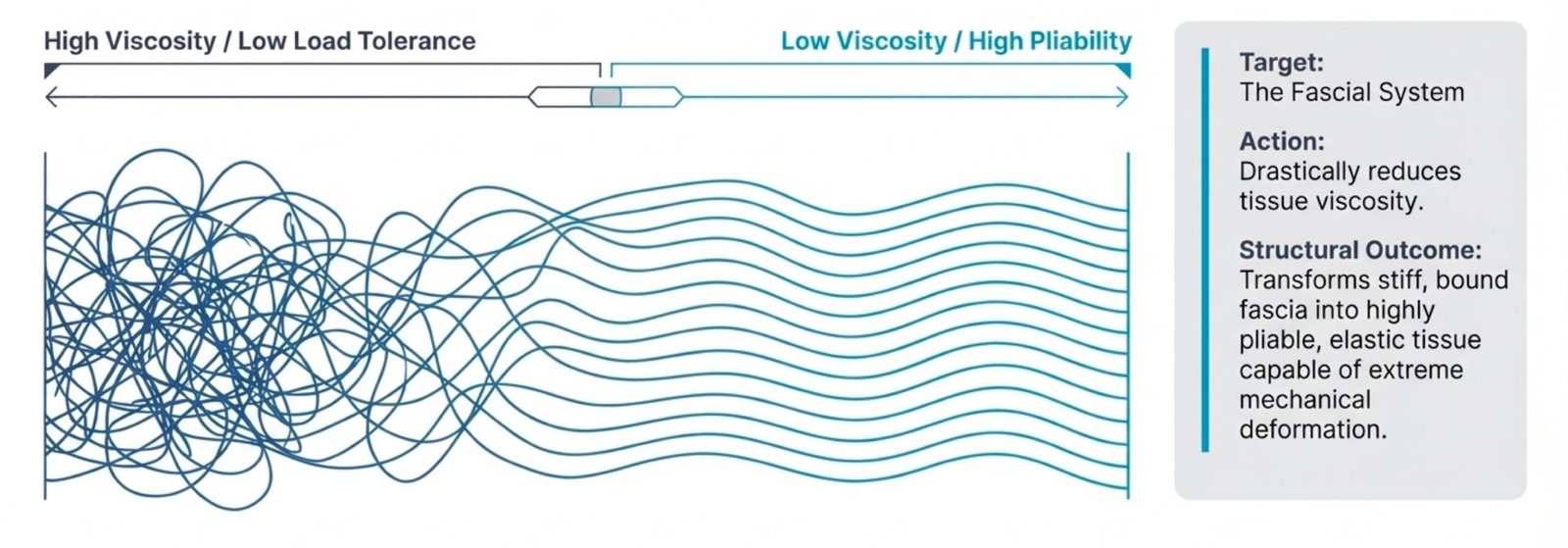
Clinicians may use terms like tissue pliability or fascial viscosity, but the practical question is simpler: does the area feel stiff and resistant, or does it feel more supple and workable?
This is different from comfort. A patient might say, “It feels looser,” while a clinician may notice better glide, less resistance, or easier motion.
At this level, TECAR is being used to help shift the feel of the tissue. If tissue feels less stiff or less guarded, it may be easier to do manual treatment, add range of motion, or move into more active rehab work.
This is also where an important distinction matters:
- Tissue feel / pliability is about mechanics
- Comfort is about how sensitive or protected the area feels
- Circulation is about blood flow and oxygen delivery
Those are related, but they are not the same thing.
At the biomechanical level, the focus is on how the tissue behaves. If the area feels less stiff, less resistant, or easier to move through, that can change the rest of the session. Manual treatment may feel smoother, movement may come more easily, and the clinician may be able to progress the work more naturally.
Why does this matter clinically? Because treatment decisions often come down to whether the area can tolerate more movement now than it could a few minutes ago.
In simple terms: This is the “does it feel less stiff?” level. If the area moves more easily and resists less, treatment often goes better.
Neural level: how TECAR may help the area feel calmer and easier to treat
The neural level is about sensation, guarding, and how the nervous system is responding during treatment.
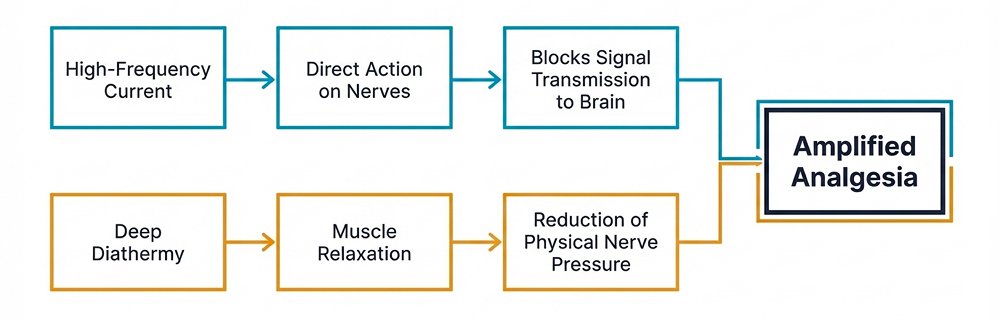
When an area is painful or irritated, the body often protects it. Muscles tighten. Movement gets cautious. The patient braces. The clinician feels resistance. Even if the tissue could move more, the nervous system may not be ready to allow it.
At this level, TECAR is often used with the goal of improving comfort and reducing guarding. That may show up as less sensitivity during hands-on care, easier movement, or a patient feeling like they can relax into treatment.
This does not mean TECAR simply “turns pain off.” A better way to think about it is that when the area feels calmer and more tolerable, the clinician can often do more useful work.
Sometimes the biggest shift during treatment is not structural. It is that the area feels calmer, less guarded, and easier to work with. When sensitivity drops and the patient stops bracing as much, movement and hands-on care often become more tolerable.
This matters because comfort often changes what is possible next. A patient who feels safer and less guarded may move more normally, tolerate manual therapy better, and transition into exercise sooner.
In simple terms: Sometimes the biggest shift is not that something got fixed instantly. It is that the area feels calmer, less guarded, and easier to work on.
Systemic level: local circulation and the treatment environment around the tissue
The systemic level is really about the local environment around the treated area.
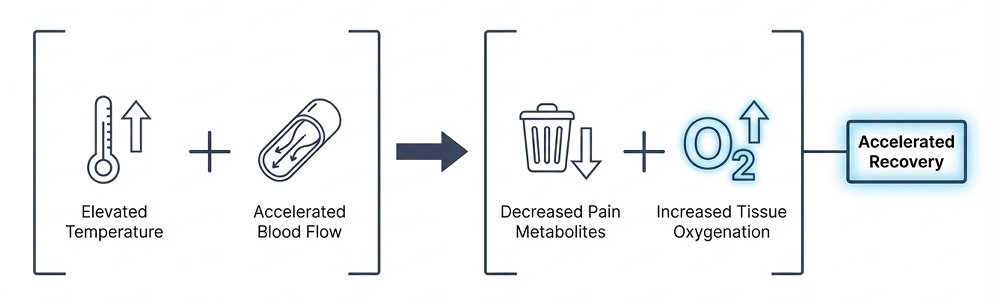
This is where clinicians talk about circulation, oxygenation, and the movement of byproducts away from tissue. That can sound broad, but the basic idea is simple: when local circulation improves, the area may have a better setting for treatment and activity.
At this level, TECAR is often discussed as supporting local blood flow, oxygen delivery, and the movement of byproducts away from the area.
Again, this is not the same as tissue pliability or comfort. A tissue can feel more workable. A patient can feel more comfortable. And the area can also have more circulation. Those are different parts of the picture, even though they often happen together.
This level is about the local environment around the treated area. As circulation increases, the area may feel less sluggish and more ready for movement or treatment. That does not mean circulation is the same thing as comfort or pliability, but it can be part of why the session starts to feel more productive.
This level matters when an area feels sluggish, congested, or slow to loosen up. A clinician may be trying to improve the local treatment environment so movement and hands-on care can go more smoothly.
In simple terms: This is the blood-flow piece. The goal is to help the treated area feel more active, better supplied, and less stuck during care.
Micro level: what happens at the cellular level
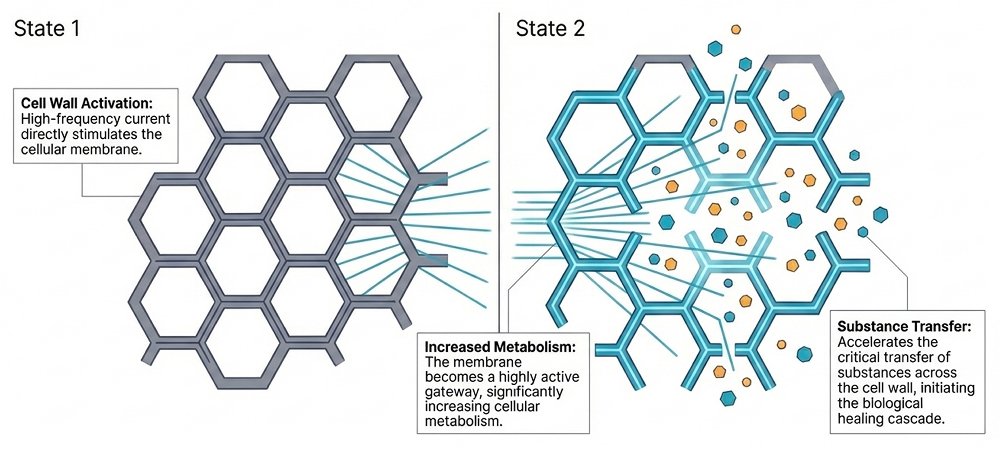
At the micro level, TECAR therapy is thought to affect the tissue environment around and within the cells being treated.
Your body’s cells are constantly moving things in and out through their outer membrane, including water, oxygen, nutrients, and charged particles like electrolytes. That exchange helps the tissue do its job. When an area is irritated, overloaded, or not functioning well, that process may become less efficient.
TECAR sends radiofrequency energy into the tissue. Because the body contains water and minerals, that energy can move through the area and create a controlled effect below the surface. Clinicians often describe this as supporting cellular activity and exchange, not just creating warmth.
In simple terms: TECAR may help create a better local environment for the tissue. That can support circulation, oxygen delivery, and normal tissue function at a very small scale.
You do not directly feel the cellular effect itself. What you notice is the result: gentle warmth, less tightness, easier movement, and a treatment that often feels smoother and more comfortable.
Why the five mechanics matter
TECAR therapy can sound overly technical when it is explained with too much jargon. But the basic idea is actually straightforward.
The five mechanics in this article are simply five ways to explain what clinicians may be seeing and feeling during treatment. One level helps explain the heat effect. Another explains changes in tissue feel and movement. Another looks at comfort and guarding. Another looks at circulation around the area. And the last looks at what may be happening at the cellular level.
Taken together, they tell one story: TECAR is not usually used for surface warmth alone. It is used to help the treated area become more responsive to care.
That is why patients may notice warmth, easier movement, less tightness, and a smoother treatment experience, while clinicians are thinking more broadly about treatment readiness.
In simple terms: the five mechanics are just five different ways of describing how TECAR may help the body feel better prepared for movement, hands-on treatment, and recovery.