TECAR therapy is easier to understand when you stop thinking about it as a technical device and start thinking about how it fits into treatment.
Clinicians often use TECAR as part of care to support comfort, circulation, tissue preparation, and movement-based treatment. A practical way to explain how it works is to look at it across five levels: tissue, biomechanical, neural, systemic, and micro.
What is TECAR therapy?
TECAR therapy is a form of radiofrequency treatment used as part of care.
In practice, clinicians may use TECAR to support:
- deep internal heat within tissue
- circulation in the treated area
- tissue pliability
- patient comfort during treatment
- a smoother transition into movement and return to activity
That does not mean every session looks the same. TECAR can be used differently depending on the body area, the treatment goal, the clinician’s style, and whether the session is more table-based, movement-based, or a mix of both. It is part of why physical therapists, chiropractors, sports medicine clinicians, and other hands-on providers are interested in it.
What are the mechanics of TECAR therapy?
A practical way to understand TECAR is through five levels:
- Micro level
TECAR is sometimes discussed at the cellular level in terms of membrane activity and substance exchange. - Tissue level
TECAR is often described in terms of deep internal diathermy, meaning heat generated within tissue rather than only at the surface. - Biomechanical level
Clinicians may think about TECAR as a way to support tissue pliability and reduce the feeling of stiffness in the treated area. - Neural level
TECAR is also used with the goal of supporting comfort, easing muscle guarding, and helping treatment progress more smoothly. - Systemic level
It is often associated with local circulation support, tissue oxygenation, and movement of metabolic byproducts away from the treated area.
A simple way to think about it is this:
TECAR therapy is not just about heat. Clinicians often use it because it can support multiple parts of the treatment experience at the same time.
The tissue level: deep internal diathermy
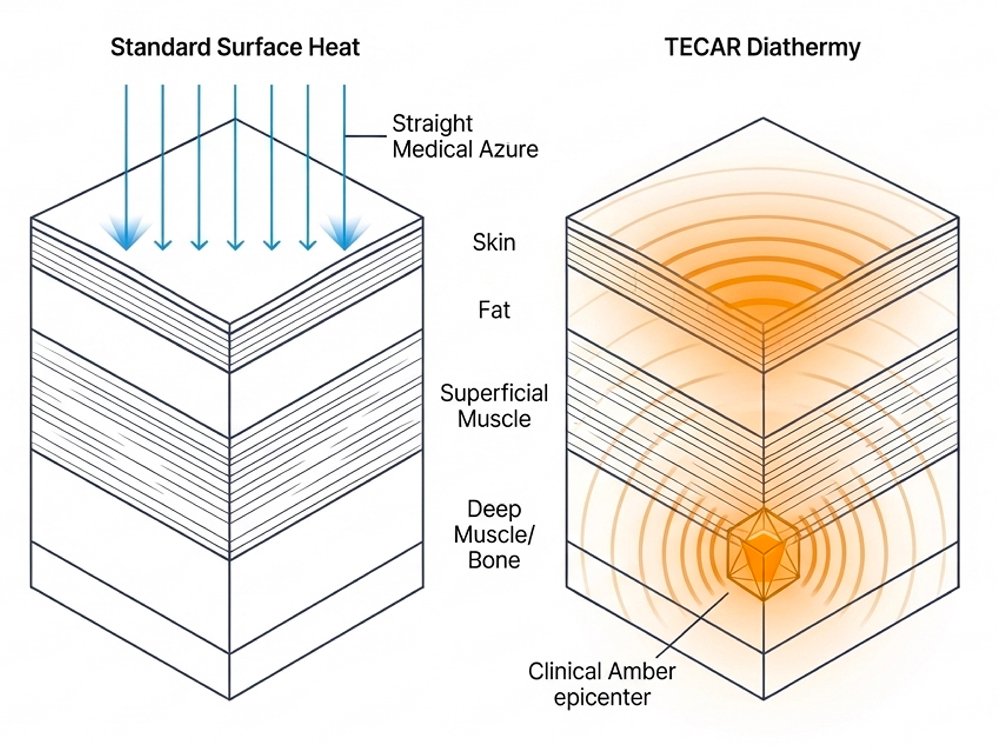
One of the clearest starting points is the tissue level.
TECAR is often described as a form of deep internal diathermy. That phrase sounds technical, but the main idea is straightforward: clinicians are thinking about heat generated within tissue, not just warmth sitting on the skin.
This matters because basic surface heat and internally generated heat are not the same conversation.
In practical terms, clinicians may use TECAR at the tissue level to support:
- tissue preparation before hands-on care
- a sense of warmth in deeper structures
- mobility-focused treatment
- a more usable treatment window before active work begins
For clinicians, this can change how the session feels.
Instead of applying heat as a separate step and then moving on, TECAR may be used during treatment itself. That is one reason it often feels more integrated than simpler heating approaches.
The biomechanical level: tissue pliability and fascial viscosity
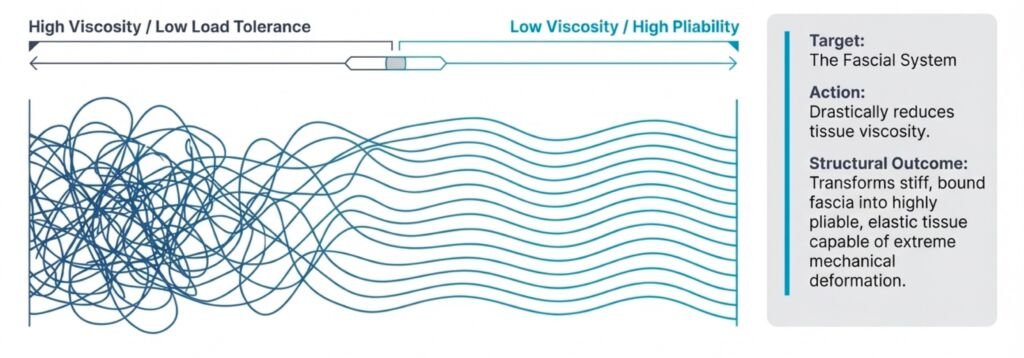
At the biomechanical level, TECAR is often discussed in terms of how tissue feels and behaves during treatment.
Some clinicians use words like fascial viscosity or tissue pliability. A simpler way to say that is this: tissue may feel less stiff and easier to work with.
That matters because stiffness can affect:
- comfort during treatment
- how easily a patient moves
- how much load or movement a patient tolerates
- how smoothly a session progresses from one phase to the next
TECAR is often paired with manual care for this reason. Clinicians may use it when they want to support a more workable treatment environment before or during hands-on techniques.
In simple terms
At the biomechanical level, TECAR is often used because clinicians want tissue to feel:
- warmer
- less stiff
- easier to move through
- more ready for hands-on work or guided motion
The neural level: supporting comfort during treatment
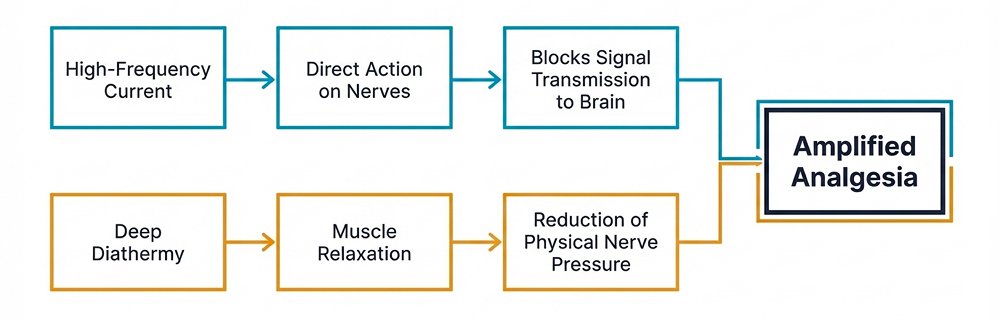
The neural level is where TECAR often becomes easier to understand from the patient side.
A session is not only about what is happening in tissue. It is also about how the patient feels during treatment.
Clinicians may think about TECAR at the neural level in terms of:
- supporting comfort
- easing muscle guarding
- reducing sensitivity in the treated area
- making it easier to continue into movement-based work
This matters because comfort influences what happens next.
If a patient feels more comfortable during treatment, it may be easier to progress the session into:
- mobility work
- range-of-motion exercises
- activation
- more functional movement
That is one reason TECAR is often described as helping sessions feel smoother and more connected.
Why this matters in practice
- Comfort shapes patient tolerance
- Better tolerance can support treatment progression
- It gives clinicians another reason to integrate TECAR into active care, not just passive care
The systemic level: circulation, oxygenation, and local tissue support
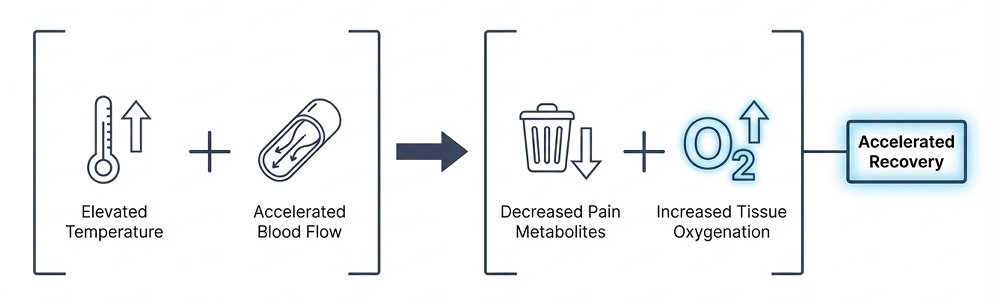
At the systemic level, clinicians often talk about TECAR in relation to circulation.
This is one of the most familiar parts of the TECAR conversation because it connects directly to how many providers think about tissue support.
In practical terms, TECAR is often used with the goal of supporting:
- local blood flow
- tissue oxygenation
- the movement of metabolic byproducts away from the treated area
- a more favorable environment for treatment and activity
This is also one reason TECAR is relevant across different types of practice.
A PT may think about circulation in the context of mobility and function.
A chiropractor may think about it in the context of hands-on treatment and patient comfort.
A sports medicine clinician may think about it in the context of tissue readiness and return to activity.
In simple terms
At the systemic level, TECAR is often used to support:
- warmth
- circulation
- oxygen delivery
- local tissue activity
The micro level: cellular activity and membrane-level exchange
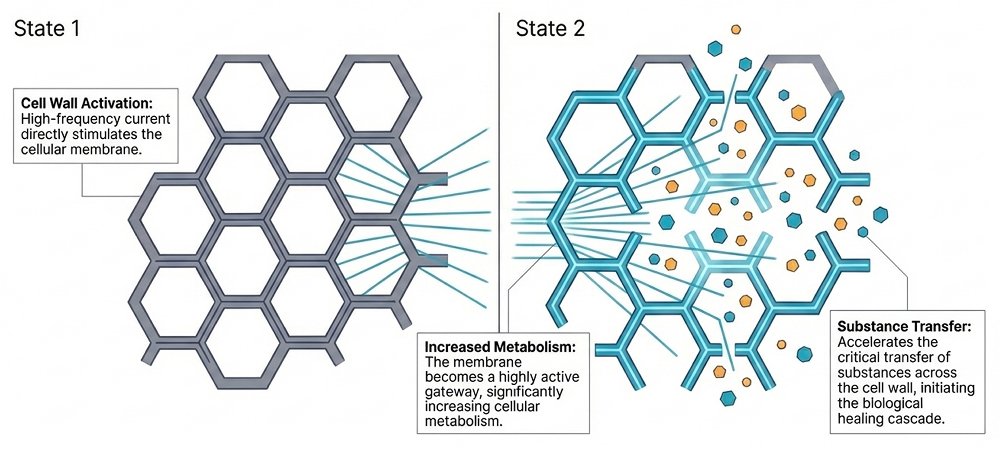
The micro level is the smallest and most technical part of the story, but it is still useful when explained clearly.
At this level, TECAR is sometimes discussed in terms of:
- membrane-level stimulation
- cellular activity
- substance exchange across the cell membrane
The safest and most practical way to explain that is this:
TECAR is often framed as supporting activity at a level deeper than sensation alone. That helps clinicians think about the technology as more than just a warming modality.
In simple terms
At the micro level, TECAR is often discussed as a technology that may support cellular activity and tissue exchange processes in the treated area.
Why these mechanics matter in practice
The five levels above are useful on their own, but they matter most when you put them back into a real visit.
Clinicians do not treat a chart. They treat a person.
That means the practical value of TECAR often comes down to whether it helps support a better session.
In practice, these mechanics matter because they may help clinicians:
- prepare tissue for manual work
- support comfort during treatment
- make movement feel easier to introduce
- blend treatment into a more connected workflow
- adapt the session to the body area and goal
This is also why TECAR can feel flexible.
It is not locked into one body region, one treatment style, or one phase of care.
TECAR is often used because it can support more than one part of the treatment experience at once.
How clinicians may integrate TECAR into treatment
Another reason clinicians search for “how TECAR therapy works” is because they want to know how it fits into actual treatment.
There is no single protocol that defines every use case, but many clinicians think about integration in a few common ways.
TECAR may be used:
- during manual treatment
- during mobility-focused care
- before movement work
- during movement-based treatment
- as part of a broader hands-on session
A simple treatment flow might look like:
- Assess the area and goal
- Use TECAR during focused treatment
- Continue into hands-on care or mobility work
- Progress into movement as appropriate
- Use clinical judgment based on patient response
This is part of what makes TECAR attractive to PTs and chiropractors in particular. It can be used in a way that moves with the session instead of interrupting it.
What about CET and RET?
Many clinicians eventually run into the terms CET and RET, especially when comparing TECAR systems.
A simple way to introduce them is this:
- CET, or capacitive mode, is often associated with more superficial tissue emphasis
- RET, or resistive mode, is often associated with deeper structures
Those are broad descriptions, not rigid rules.
The main reason they matter is that they give clinicians different ways to think about:
- tissue depth
- body area
- treatment feel
- session goals
Key takeaways
If you only remember a few things from this page, remember these:
- TECAR therapy is a form of radiofrequency treatment used as part of care
- It is often discussed across five levels: tissue, biomechanical, neural, systemic, and micro
- It is not only about surface heat
- Clinicians often use it to support comfort, circulation, tissue pliability, and movement integration
- It can fit naturally into manual care, mobility work, and more active treatment
- CET and RET give clinicians different ways to think about treatment depth and approach
FAQ
What is TECAR therapy?
TECAR therapy is a form of radiofrequency treatment that clinicians use as part of care. It is often used to support comfort, circulation, tissue preparation, and treatment integration.
How does TECAR therapy work?
In simple terms, TECAR therapy uses radiofrequency energy in a way that clinicians may use to support deep internal heat, tissue pliability, circulation, and treatment flow.
What is the mechanism of action of TECAR therapy?
A practical way to describe the mechanism of action is that TECAR is often discussed across several treatment levels, including tissue, biomechanical, neural, systemic, and micro effects.
What is deep internal diathermy?
Deep internal diathermy refers to heat generated within tissue rather than only at the surface. This is one of the core ways clinicians describe TECAR therapy.
What is the difference between CET and RET?
CET and RET are two treatment modes often associated with different tissue emphasis. CET is often linked to more superficial tissue, while RET is often linked to deeper structures.
How do physical therapists use TECAR therapy?
Physical therapists may use TECAR therapy during manual care, mobility work, movement-based treatment, and sessions focused on comfort and return to activity.
How do chiropractors use TECAR therapy?
Chiropractors may use TECAR therapy as part of hands-on care, soft tissue-focused treatment, mobility work, and visits where comfort and treatment flow matter.
Is TECAR therapy only about heat?
No. While heat is part of the conversation, clinicians also discuss TECAR in terms of tissue pliability, circulation support, comfort, and how it fits into active treatment.
Why do clinicians use TECAR therapy?
Clinicians often use TECAR because it can support multiple parts of the treatment experience at once, including comfort, circulation, tissue preparation, and workflow integration.
What makes TECAR different from basic surface heat?
One of the main differences is that TECAR is commonly described in terms of deep internal diathermy and treatment integration, rather than just external warming.
See how Winback TECAR fits into treatment
The mechanics matter because they shape what the session feels like in practice.
If you want to see how Winback TECAR may fit into:
- hands-on care
- mobility-focused treatment
- movement-based sessions
- PT or chiropractic workflows
the next step is seeing it in a real clinical context.
Ready to see these mechanics in practice? Schedule a virtual Winback TECAR demo.