Introduction
Every treatment begins at the cellular level. TECAR Therapy — a form of radiofrequency therapy used worldwide in physical therapy, rehabilitation, and sports performance — enhances the body’s natural repair processes by stimulating the exchange of energy within cells. But what actually happens when this energy interacts with human tissue?
Let’s take a closer look at the science: ion exchange, cell membrane permeability, and ATP production — three pillars of the TECAR effect.
1. Ion Exchange: The Spark of Cellular Activation
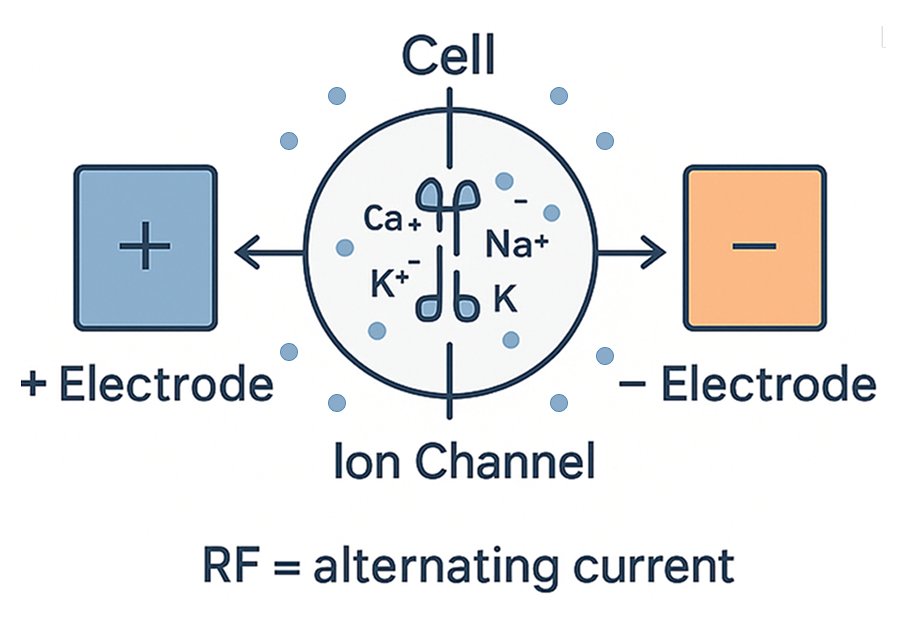
TECAR Therapy works by creating a mild oscillating electrical field between two electrodes. This stimulates ion exchange across the cell membrane — the process where charged particles (like sodium, potassium, and calcium) move in and out of the cell.
This exchange helps rebalance the cell’s resting potential, promoting homeostasis and enhancing communication between cells. In muscle and connective tissue, this can reduce fatigue, improve tone, and create optimal conditions for tissue recovery.
2. Membrane Permeability: Opening the Gateways
As ion movement increases, so does membrane permeability — the ability of the cell wall to allow nutrients, oxygen, and signaling molecules to pass through.
Improved permeability supports faster transport of essential molecules involved in repair, like amino acids and glucose. It also enhances metabolic waste removal, keeping the cellular environment stable.
By facilitating this balance, TECAR Therapy encourages the body’s natural recovery mechanisms to operate more efficiently without invasive stimulation.
3. ATP Production: The Cellular Engine
All these changes lead to one major effect: enhanced ATP (adenosine triphosphate) production. ATP is the energy currency of the cell — fueling everything from protein synthesis to tissue repair.
Through controlled radiofrequency interaction, TECAR Therapy supports mitochondria (the cell’s powerhouses) in generating more ATP. Clinically, this means faster healing, improved microcirculation, and reduced discomfort — all driven by optimized cellular energy.
4. Clinical Relevance: Turning Cellular Energy into Functional Recovery
For physiotherapists, chiropractors, and sports rehabilitation specialists, understanding these cellular dynamics translates to practical benefits. TECAR Therapy isn’t just a comfort modality — it’s a science-driven technology designed to restore biological balance and accelerate recovery through deep, controlled energy transfer.
Whether applied in acute injury, chronic pain, or performance recovery, the underlying mechanism remains the same: activate the cell’s own capacity to heal.
Conclusion
Every session of TECAR Therapy tells the same story — from ion exchange to ATP production, the body responds naturally to controlled energy. By understanding what happens at the cellular level, clinicians can better appreciate how Winback’s technology transforms biological processes into real-world results.