
Provider Name & Treatment Location: Romina Chavez Aguilar, PT; Rehabilimed, Orizaba, Veracruz, México
Device: Winback BACK4 (Winback, France)
Key Words: Postpartum rehabilitation; cesarean section; diastasis recti; pelvic floor; TECAR; Hi-EMS; Winback Hands On; stress urinary incontinence; transversus abdominis; scar mobilization
Summary (Abstract)
This case report describes the integrated postpartum rehabilitation of a 38-year-old recreational swimmer presenting at 4 weeks following repeat cesarean section with abdominal wall dysfunction, diastasis recti, pelvic floor overactivity, mild stress urinary incontinence, and pelvic heaviness. Baseline Oxford Scale pelvic floor strength was 3/5. Over 12 weekly sessions, treatment combined the Winback BACK4 device – delivering capacitive-resistive TECAR therapy (CET and RET), Hi-EMS, and Hi-TENS via the Hands On protocol – with manual therapy, scar mobilization, Pilates-based exercise, pelvic floor training with biofeedback, and patient education. A phased approach was used: an acute protocol for Sessions 1–2 targeting drainage, soft tissue preparation, and early neuromuscular activation, transitioning to a progressive loading protocol for Sessions 3–12.
Pelvic floor overactivity resolved after the second treatment session, unlocking progression to motor control and strengthening. At reassessment (July 20, 2026), standardized clinical photographs and ultrasound demonstrated visible improvement in abdominal wall contour and inter-rectus distance. The patient reported resolution of pelvic heaviness, meaningful reduction in stress urinary incontinence, improved body awareness, and return to daily activities with confidence. No adverse events were documented.
Key take-away lessons:
- The Winback BACK4 Hands On protocol simultaneously addresses tissue-level barriers (scar restriction, abdominal wall dysfunction, soft tissue inhibition) and neuromuscular barriers (TVA inhibition, pelvic floor overactivity) within a single application, compressing the early postpartum rehabilitation timeline.
- Pelvic floor overactivity is a prerequisite target in early postpartum rehabilitation; until it is resolved, motor control and strengthening cannot safely progress. Resolution within 2 sessions of the acute Winback protocol demonstrates how TECAR and Hi-EMS can rapidly remove this barrier.
- A phased approach with acute drainage and tissue preparation transitioning to progressive loading mirrors the tissue healing timeline and is essential for safe, effective postpartum rehabilitation following cesarean section.
- Integrating device-assisted physiotherapy with manual therapy, therapeutic exercise, biofeedback, and patient education produces outcomes that reflect whole-system rehabilitation, not single-modality treatment.
Introduction
This case presents the rehabilitation of a woman following repeat cesarean section using an integrated physiotherapy approach assisted by the Winback BACK4 device, delivering capacitive-resistive radiofrequency (TECAR) therapy and high-frequency electrical muscle stimulation (Hi-EMS) via the Hands On protocol. The intervention focused on restoring abdominal wall function, improving pelvic floor muscle performance, optimizing scar mobility, and establishing motor control during the early postpartum period.
Cesarean section is the most common major surgical procedure performed worldwide. The resulting abdominal wall trauma (involving layers of skin, fascia, and uterine tissue) can produce lasting functional deficits including scar adhesion, diastasis recti, abdominal wall inhibition, and pelvic floor dysfunction. Pelvic floor overactivity is a particularly important early target: it reflexively inhibits the transversus abdominis and prevents meaningful neuromuscular rehabilitation until it is resolved. The combination of TECAR and Hi-EMS in a Hands On protocol offers the ability to address tissue-level barriers (scar, soft tissue restriction, lymphatic flow) and neuromuscular barriers (motor inhibition, pelvic floor overactivity) concurrently — a capability not available through manual therapy or exercise alone.
Patient Information / Diagnosis
Demographics: 38-year-old female; recreational swimmer; second pregnancy
Chief Complaint: Abdominal wall dysfunction, diastasis recti, pelvic floor overactivity, mild stress urinary incontinence, and pelvic heaviness at 4 weeks following repeat cesarean section. History of lumbar pain during both pregnancies.
Diagnosis: Postpartum abdominal wall dysfunction; diastasis recti; pelvic floor overactivity; mild stress urinary incontinence; cesarean section scar.
Relevant Medical / Family History: History of lumbar pain during both pregnancies. No other significant comorbidities reported.
Prognostic Characteristics: Favorable – motivated patient, good adherence, absence of significant comorbidities, early initiation of postpartum rehabilitation (4 weeks post-cesarean).
Clinical Findings
Objective: Baseline (May 2, 2026)
- Oxford Scale (pelvic floor muscle strength): 3/5.
- Pelvic floor overactivity: present; limiting progression to motor control and strengthening exercises.
- Abdominal wall: altered function; clinical evidence of diastasis recti.
- Inter-rectus distance: increased on ultrasound (baseline documented; see Figure 2).
- Stress urinary incontinence: mild.
- Pelvic heaviness: present.
- Cesarean section scar: assessed for mobility and adhesion.
- Diagnostic imaging: ultrasound assessment of abdominal wall (inter-rectus distance) performed at baseline and at reassessment.
Treatment Timeline and Intervention
Timeline
| Phase | Date | Event |
| Cesarean Section | April 4, 2026 | Repeat cesarean section performed. |
| Initial Assessment | May 2, 2026 | Postpartum assessment at 4 weeks. Diagnoses: abdominal wall dysfunction, diastasis recti, pelvic floor overactivity, mild stress urinary incontinence, pelvic heaviness. Oxford Scale 3/5. Ultrasound inter-rectus distance baseline recorded. |
| Phase 1 — Acute (Sessions 1–2) | May 2026 | Winback BACK4 acute protocol (CET drainage + RET/Hi-EMS/Hi-TENS). Manual: diaphragmatic release, scar mobilization, pelvic mobility, breathing, TVA activation. Pelvic floor overactivity resolved by end of Session 2. |
| Phase 2 — Chronic / Loading (Sessions 3–12) | May – July 2026 | Winback BACK4 chronic protocol (CET/RET/Hi-TENS/Mix). Exercises: Pilates-based during RET, TVA activation, scar treatment, pelvic floor training + biofeedback, posture education. |
| Reassessment | July 20, 2026 | 12-session reassessment. Clinical photographs and ultrasound confirmed improved abdominal wall contour and inter-rectus distance. Full resolution of pelvic floor overactivity; improved TVA coordination; subjective resolution of pelvic heaviness and SUI improvement. |
Therapeutic Intervention
Device: Winback BACK4 (Winback, France), delivering CET, RET, Hi-EMS, and Hi-TENS via the Hands On protocol. Frequency: 1 session per week; 12 sessions total.
Phase 1 – Acute Protocol (Sessions 1–2):
| Electrode / Mode | Application | Time | Intensity |
| CET Dynamic | Abdominal drainage points | 3 min | 50% |
| CET Dynamic | Soft abdominal massage | 4 min | 10% |
| RET + Hi-TENS 2 Hz + Hi-EMS PushBack 20% | Soft abdominal massage; TVA activation with diaphragmatic breathing | 10 min | 40–60% |
| Mix + Hi-TENS 2 Hz | Soft abdominal massage | 2 min | 30–40% |
| Bracelets RET | Soft abdominal massage | 2 min | 10–20% |
Manual techniques (Phase 1):
- Diaphragmatic release
- Scar mobilization
- Pelvic mobility
- Breathing exercises
- Transversus abdominis activation
Phase 2 – Chronic / Loading Protocol (Sessions 3–12):
| Electrode / Mode | Application | Time | Intensity |
| CET Dynamic | Soft abdominal massage and over the scar | 4 min | 40%+ |
| RET Focal 30% | Soft abdominal massage; TVA activation with diaphragmatic breathing | 10 min | 60–70% |
| RET Hi-TENS Dynamic Radial 30% | Scar and lateral abdominal wall | 2 min | 40–50% |
| Mix | Soft abdominal massage | 2 min | 40–50% |
| Bracelets RET | Soft abdominal and scar massage | 2 min | 10% |
Exercises and manual techniques (Phase 2):
- Pilates-based exercises performed during RET application
- Transversus abdominis activation
- Scar treatment
- Pelvic floor muscle training with biofeedback
- Patient posture education
Adverse Events: None. Treatment was well tolerated throughout. No adverse or unexpected events reported.
Results
Objective findings (July 20, 2026 reassessment):
- Pelvic floor overactivity fully resolved by end of Session 2, enabling progression to motor control and strengthening exercises.
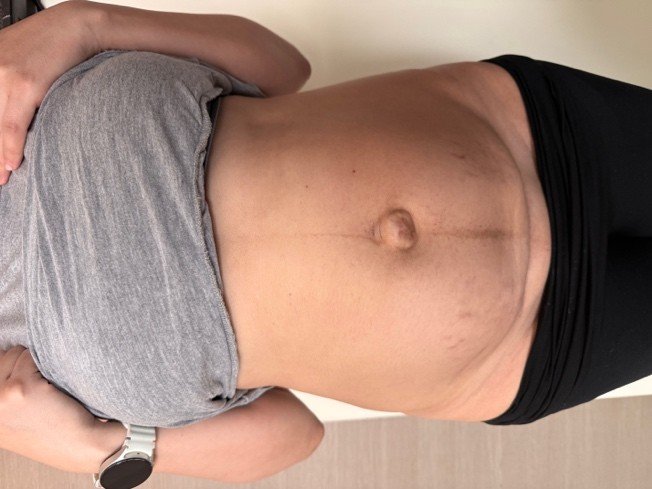
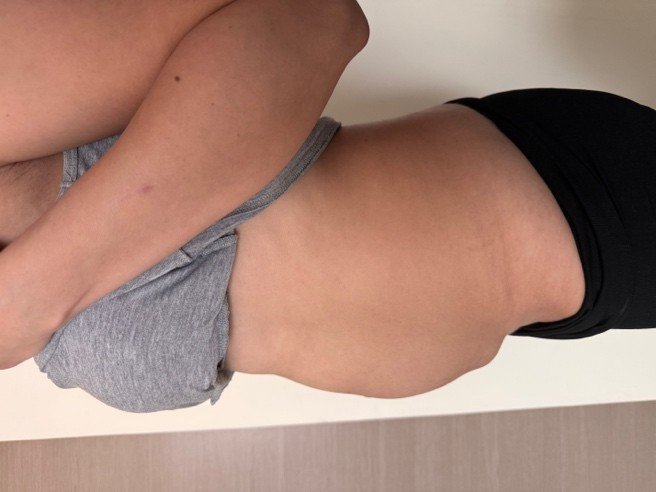
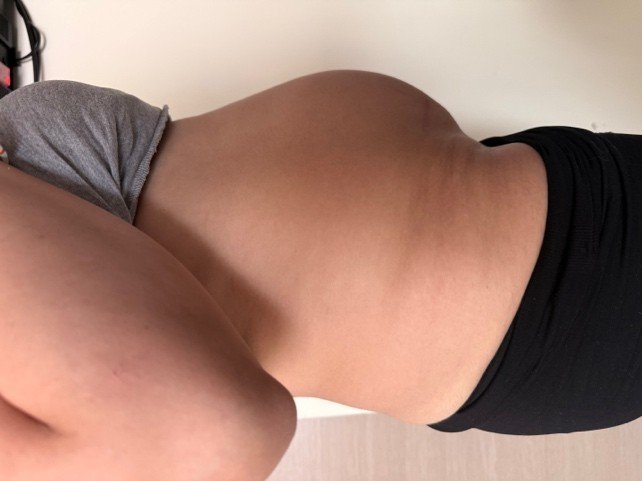
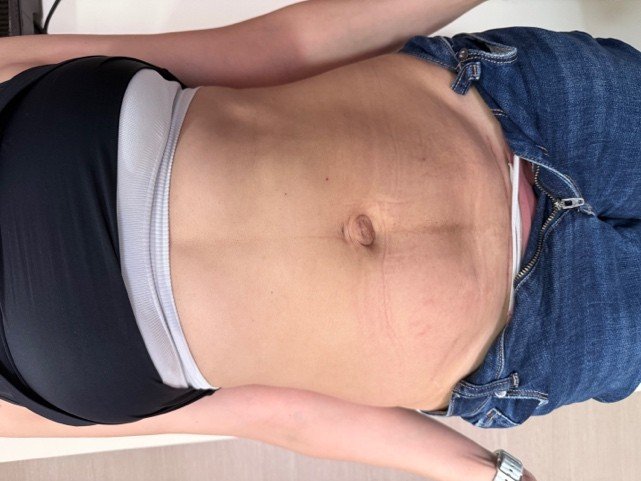
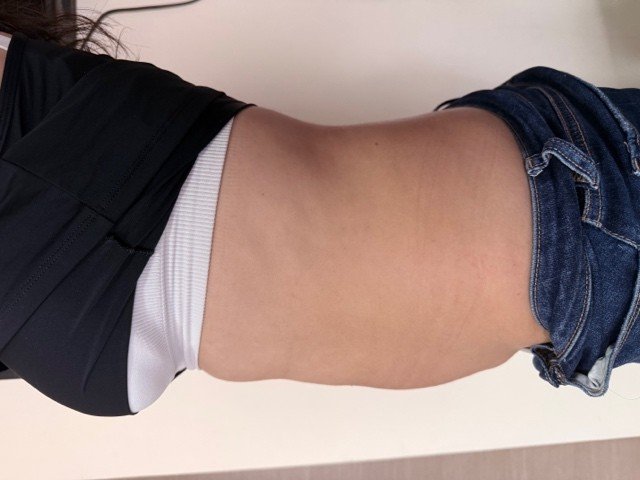
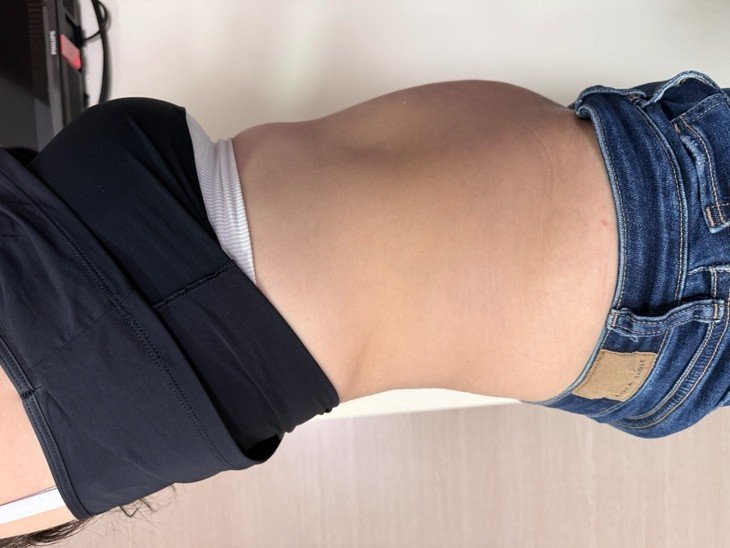
- Abdominal wall contour: visible improvement documented through standardized before-and-after clinical photographs (Figure 1).
- Inter-rectus distance: improved on ultrasound assessment (Figure 2).
- Transversus abdominis: improved activation and coordination during functional tasks.
- Cesarean section scar: improved mobility.
Subjective findings:
- Pelvic heaviness: resolved.
- Stress urinary incontinence: meaningful improvement in symptoms.
- Abdominal support and body awareness: improved.
- Patient confidence with daily activities: significantly improved.
- Adherence: patient attended all 12 scheduled sessions and completed the prescribed home exercise program throughout.
| May 2th |
| Jun 4th (After 6 treatments) |
| July 20th (After 12 treatments) |
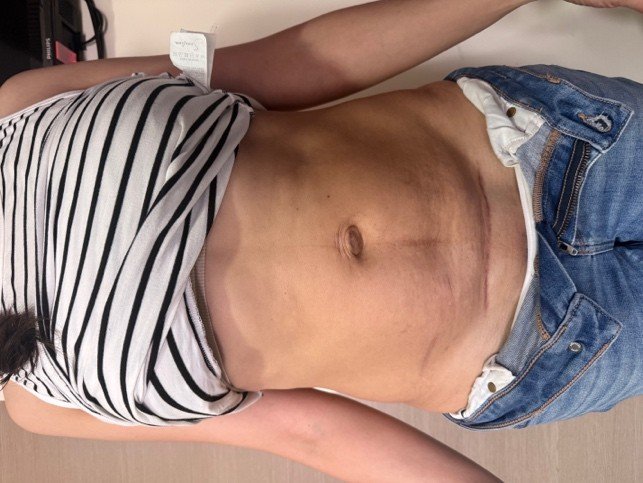
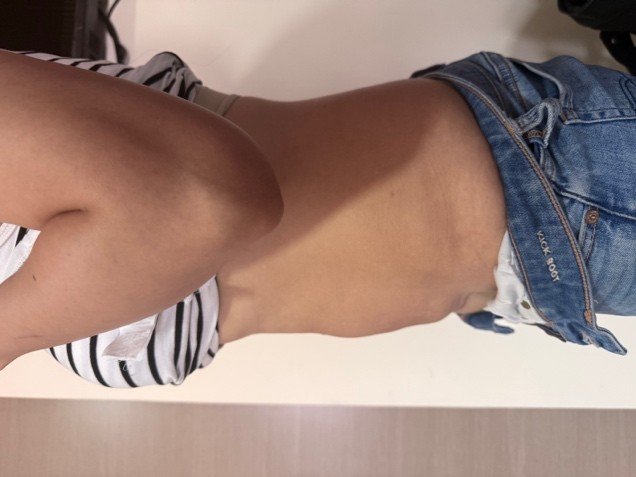
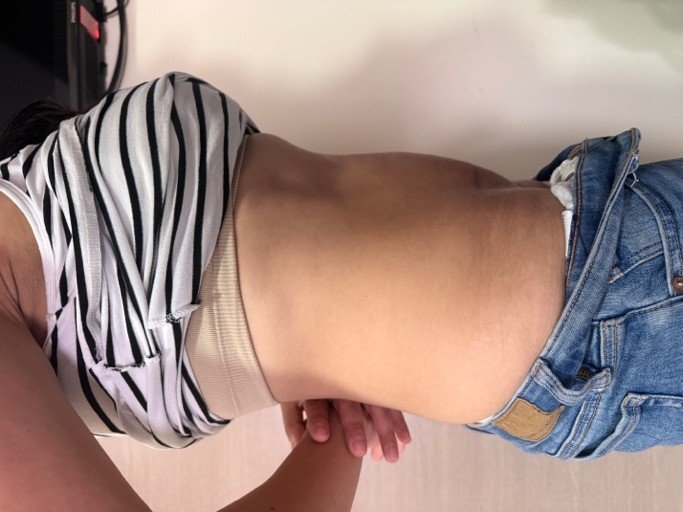
Figure 1. Clinical photographs before (left) and after (right). Abdominal wall contour at May 2, June 4 (after 6 sessions), and July 20, 2026 (after 12 sessions).
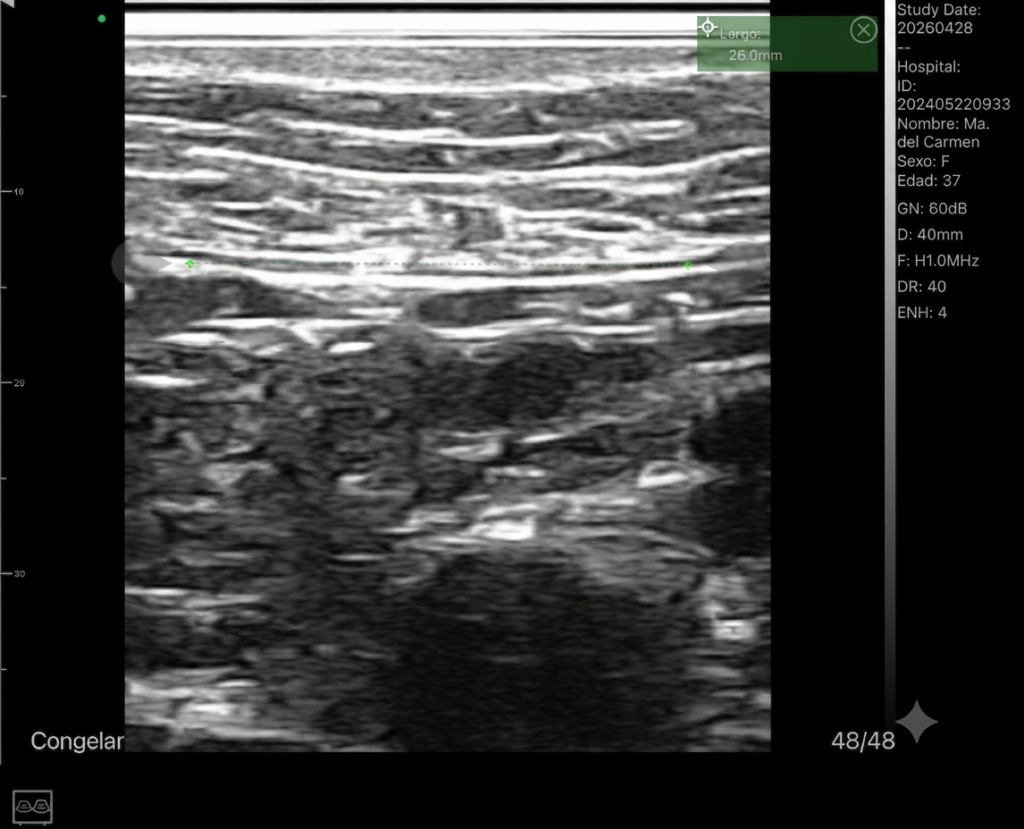
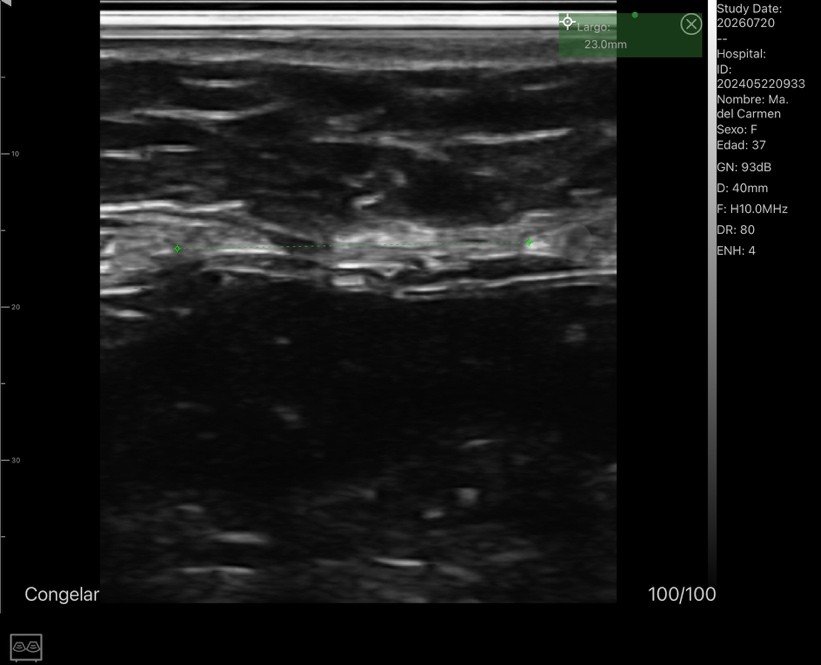
Figure 2. Ultrasound assessment of the abdominal wall (inter-rectus-distance) before and after treatment, demonstrating improvement in abdominal wall morphology and inter-rectus- distance.
Discussion
This case demonstrates the integration of Winback BACK4 TECAR and Hi-EMS Hands On treatment into a multimodal postpartum rehabilitation program following repeat cesarean section. The most clinically significant early finding was the resolution of pelvic floor overactivity within two sessions of the acute protocol – a prerequisite for safe progression to motor control and loading exercises. The combination of Hi-TENS at 2 Hz for neuromodulation, Hi-EMS PushBack for progressive muscle activation, and CET/RET for tissue preparation appears to have addressed the neuromuscular inhibition that conventionally requires several weeks to resolve through manual therapy alone.
The phased approach, with acute drainage and soft tissue preparation in Sessions 1–2, transitioning to progressive loading with Pilates-based exercise, biofeedback, and scar treatment in Sessions 3–12, mirrors the biological healing timeline of the postpartum abdominal wall and reflects best practice for cesarean section rehabilitation. The ability to apply TECAR and Hi-EMS simultaneously during therapeutic exercise (RET active during Pilates-based movements) concentrates energy in the target tissue during the highest-quality motor recruitment available to the patient, rather than treating passively at rest.
Patient Perspective
The patient reported that the pelvic heaviness she experienced in the early postpartum period began to ease within the first two treatment sessions and had fully resolved by the end of the program. She described a meaningful reduction in stress urinary incontinence episodes and a progressive improvement in her sense of abdominal support and core control as the sessions advanced from the acute to the loading phase.
By the conclusion of the 12-session program, the patient reported moving through daily activities with significantly greater confidence. She attended all scheduled sessions without interruption and adhered to the home exercise program throughout the course of treatment.
Informed Consent
Written informed consent was obtained from the patient for treatment and for the use of clinical data, photographs, and outcome measures in this case report. Documentation available on request.